
More than a redesign.
A connected business system.
For IDDQD Assembly, Puzinski connected brand, website, search content, project planning and private operations around one clear business priority: better-paying direct jobs.

Already busy.
Ready for direct business.
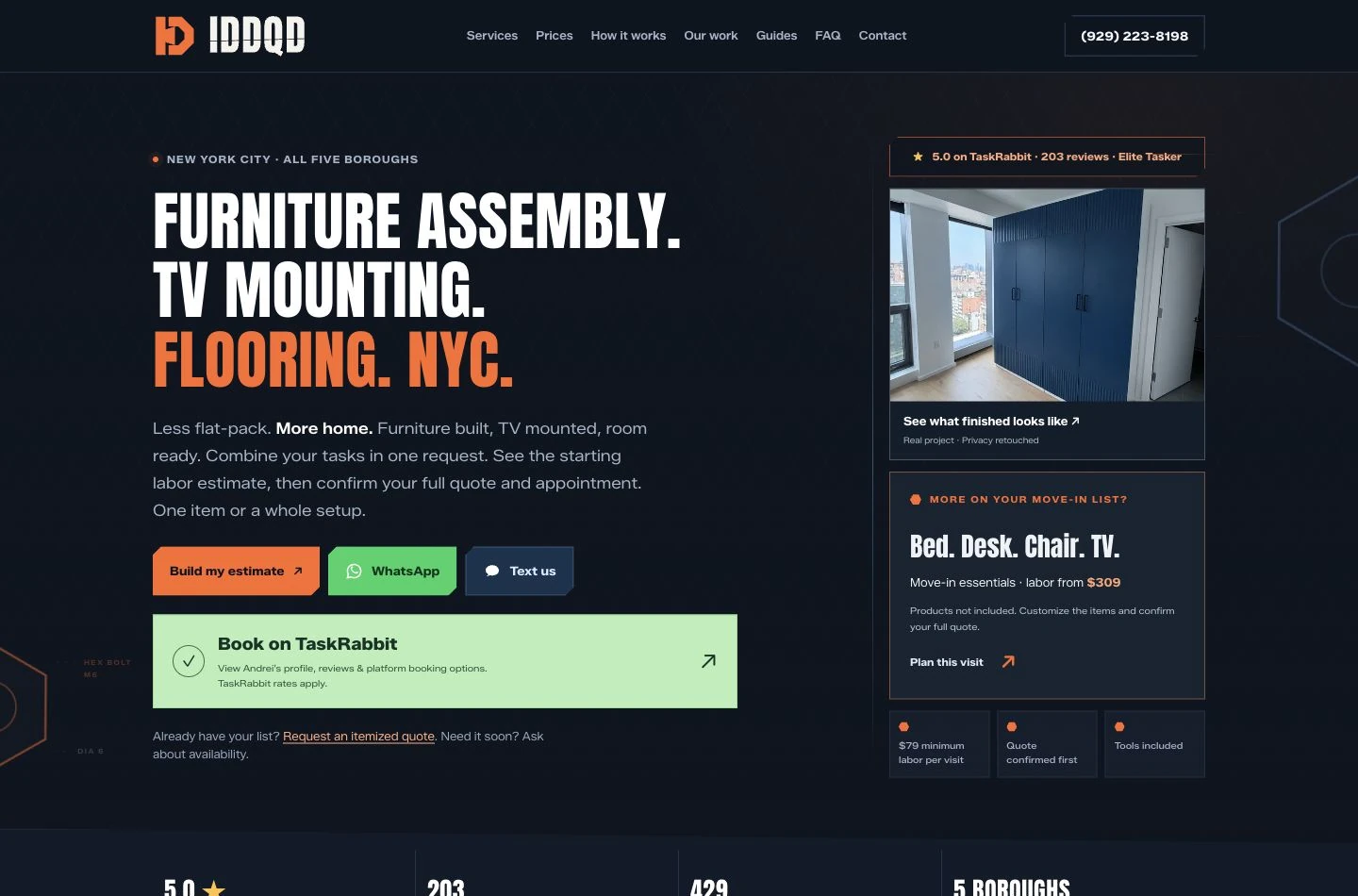
The owner was already booked Monday to Friday through TaskRabbit. He wanted a stronger route to direct customers and complete projects. The supplied website was an unpublished single-page draft. The direction was to refine its industrial character, not replace it with a different brand.
The opportunity was to connect the parts: a clear offer, relevant work, useful pricing, a complete inquiry and the owner’s next action. Puzinski owned the strategy and hands-on implementation across that journey.
Keep the recognizable industrial character. Make the business easier to understand, the project easier to describe and the next step easier to manage.
The whole scroll.
The complete change.
Inspect the original supplied page and the implemented homepage from top to bottom. Every new service, project and guide page follows below.
Before Supplied unpublished draft

After Implemented homepage

Compare the complete phone versions

Actual website captures. The original was unpublished. New pages had no previous version; this is not an A/B test or a property-renovation comparison. Original contact details are historical.
What changed.
Why it belongs.
Refine what is recognizable.
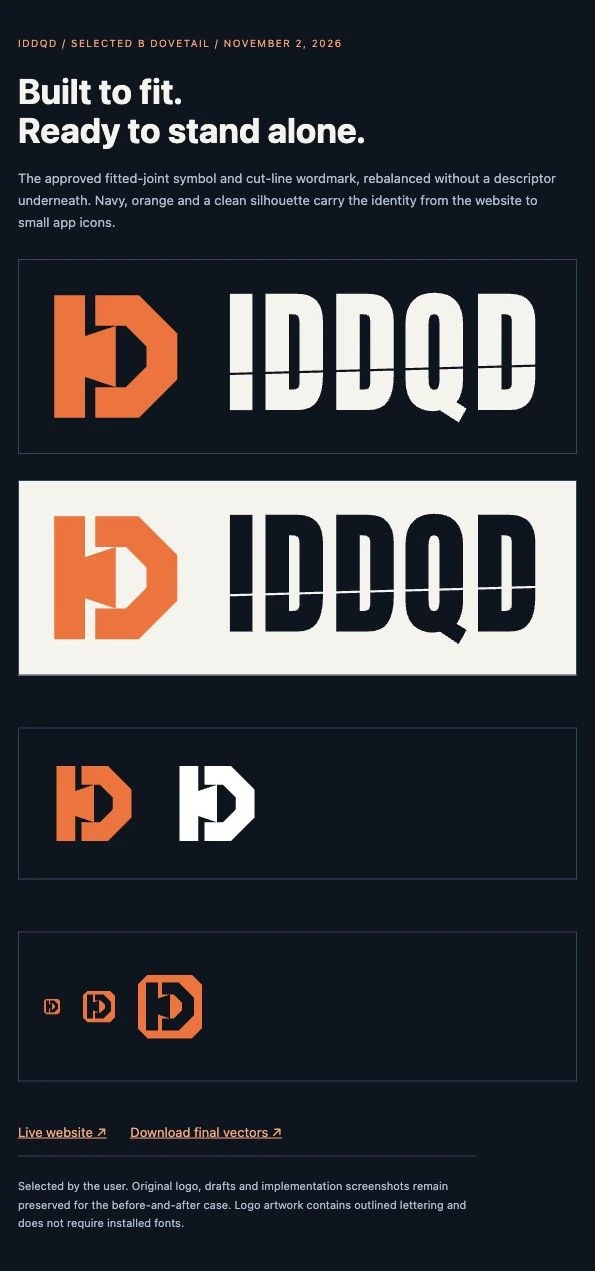
The selected Dovetail logo, symbol, favicon and share covers form one system. Navy, orange and the industrial character stay familiar, with clearer layouts and a stronger visual hierarchy.
Show the work beside the promise.
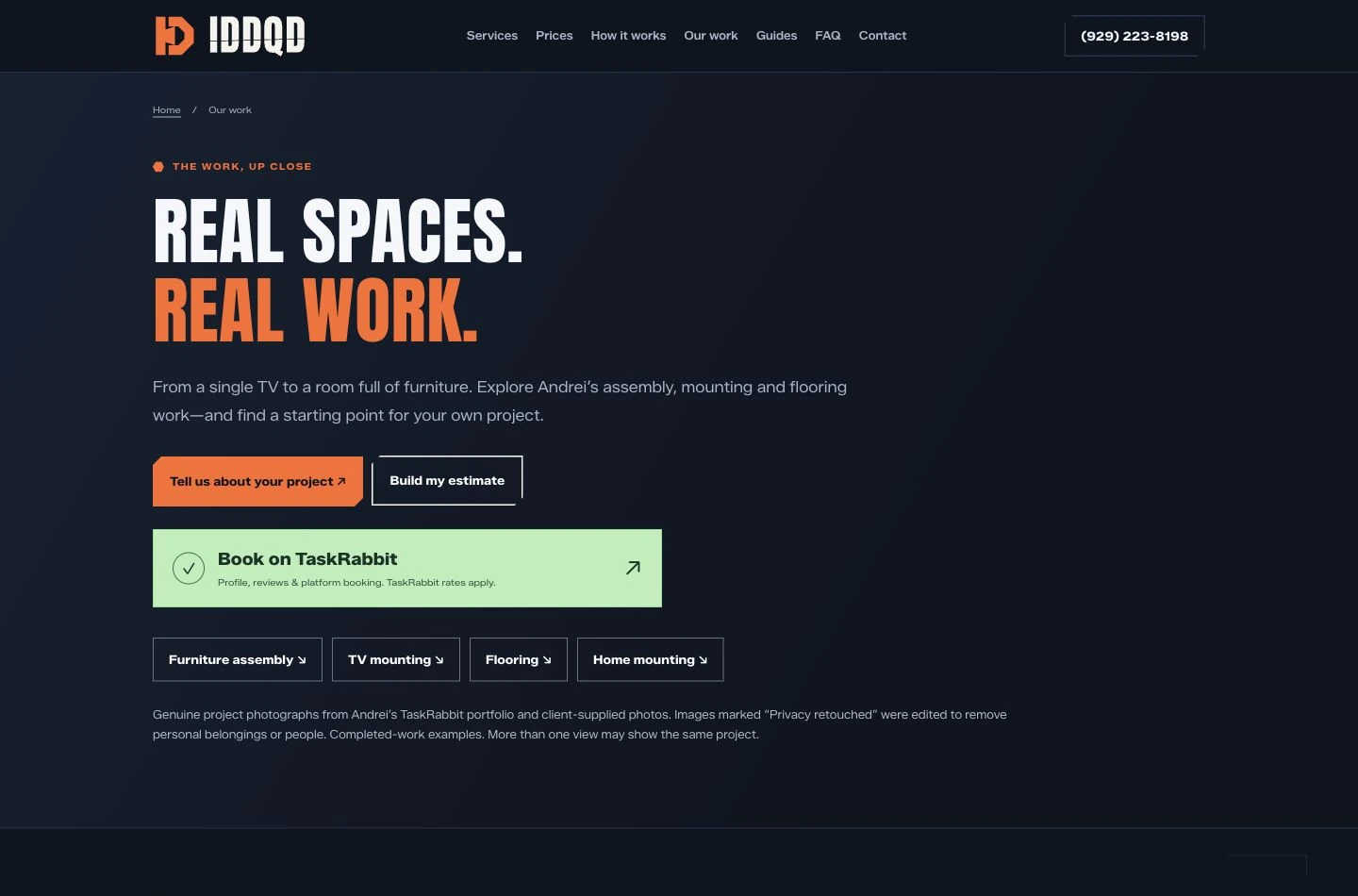
50 genuine portfolio photographs are organized around services and furniture types. Privacy edits are disclosed. The client’s existing craftsmanship supports the decision; it is not new agency-generated growth.
Make a complete list feel simple.
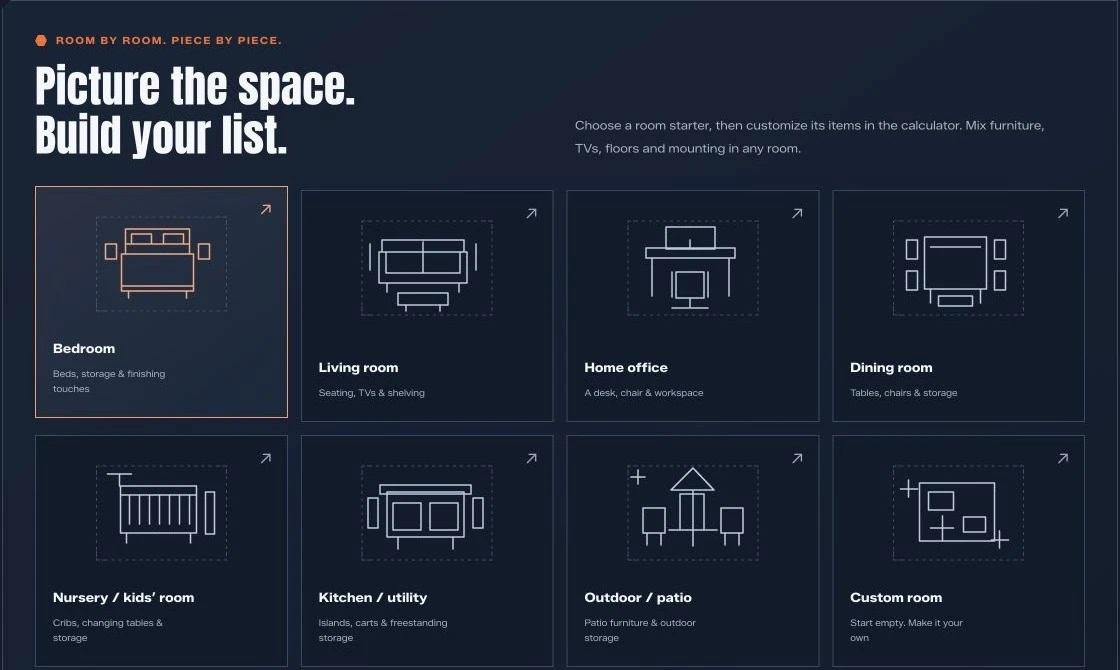
By-item and optional by-room planning cover 138 priced options, eight visual starters and seven furniture work types. Visitors can combine work, edit the list or skip the calculator.
Give the estimate context.
Units, minimum labor totals, configuration examples and WELCOME25 rules explain the starting estimate. The owner reviews suitability, scope, final price and appointment; the form does not book a visit.
Different business. Different bottleneck. The work starts with the customer journey yours actually needs.
Discuss a focused first projectEvery page has
a job to do.
Complete desktop and phone captures, with the starting point, what was added, why it was chosen and the next customer action. Scroll inside each preview or open the full image.
Homepage
Make the whole job the first impression.
- Starting point
- The original hero led with a $20 starting item. Broad service promises and a long one-page layout had to explain every kind of job.
- What Puzinski added
- A clearer multi-service headline, real-work photography, project starters, visual room planning, itemized estimates, service links, genuine portfolio proof and direct inquiry actions.
- Why this decision
- The business wanted better-paying direct projects. Leading with the complete visit gives a customer room to describe a full list instead of anchoring the conversation on one small item.
Understand the offer → see relevant work → build a project list or send details directly.
A broader, more useful project request for the owner to review. Higher booking value remains a goal to measure, not a result claimed.
Inspect the live pageFurniture assembly
Answer the furniture buyer’s actual questions.
- Starting point
- Furniture assembly shared space with every other service on the original homepage. No dedicated page existed in the archive.
- What Puzinski added
- Furniture-specific copy, genuine relevant work, preparation guidance, scope details, starting-price context, FAQs and an assembly-focused inquiry route.
- Why this decision
- A furniture customer needs product, configuration and workspace information. A dedicated page can answer those questions before asking for the request.
Recognize a similar build → understand the scope → share product details.
A relevant service destination for search visitors and a better-prepared assembly inquiry.
Inspect the live page
TV mounting
Explain the installation before the inquiry.
- Starting point
- TV mounting was one section of the supplied single-page draft. Its wall, bracket and configuration questions needed more room.
- What Puzinski added
- Genuine TV installations, screen-size starting rates, wall and bracket questions, soundbar/removal context, scope exclusions and direct project actions.
- Why this decision
- Screen size alone does not define the job. Showing the right questions makes the request more useful while keeping suitability and final pricing with the owner.
See an actual installation → understand what affects scope → send size, bracket and wall details.
A clearer starting point for review, without promising an unconfirmed installation or price.
Inspect the live page
Flooring
Make area, units and preparation understandable.
- Starting point
- Flooring information sat within the original page. A per-square-foot rate could be mistaken for the cost of a complete job.
- What Puzinski added
- Genuine flooring views, material/method explanations, room-area planning, explicit units, preparation context and the $350 minimum for area-priced installation.
- Why this decision
- A flooring request depends on area, material and current conditions. The page helps customers explain the work and understand what the starting estimate covers.
Identify the work → estimate area → share conditions for review.
A more complete flooring brief; products, preparation, suitability and final scope remain subject to confirmation.
Inspect the live page
Home mounting
Make smaller installation needs easy to recognize.
- Starting point
- Shelves, mirrors, art and curtain work had no independent destination in the supplied draft.
- What Puzinski added
- A focused mounting page, genuine examples, wall/location questions, common scope explanations and relevant inquiry links.
- Why this decision
- People often describe the object rather than the service category. Familiar examples help them identify the right route and combine items when useful.
Find the object type → see comparable work → describe the mounting locations.
An accessible entry point for a focused installation or a combined project list.
Inspect the live page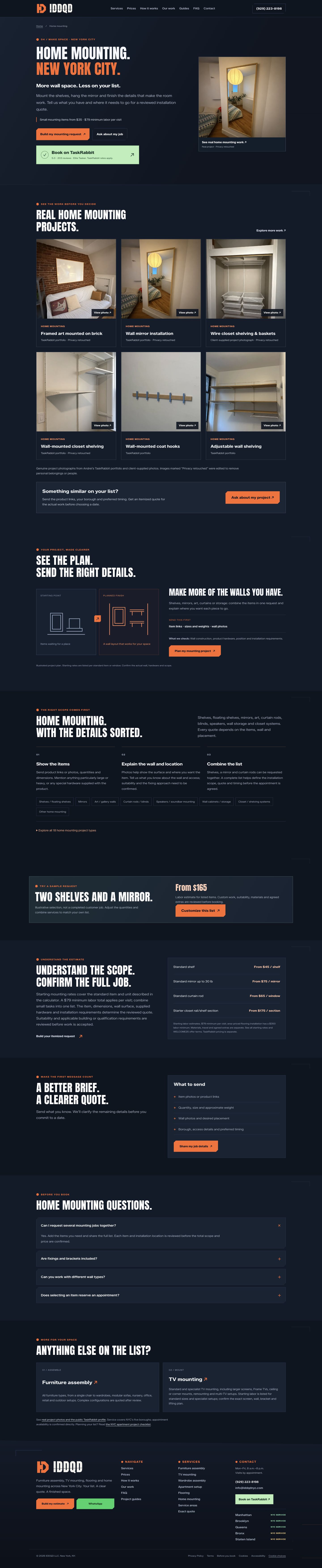
Wardrobes & IKEA PAX
Show the configuration behind the headline price.
- Starting point
- The archive had no dedicated wardrobe page. A frame price alone does not explain drawers, doors and other components.
- What Puzinski added
- Relevant wardrobe photographs, configuration guidance, component context and an editable $315 illustrative wardrobe list at the current rates.
- Why this decision
- Wardrobes can be complete projects rather than single-item requests. Explaining components helps visitors understand the work behind the estimate.
Recognize the layout → check the components → send the complete configuration.
A fuller wardrobe scope to review. The example is a planning list, not a past sale or fixed-price package.
Inspect the live page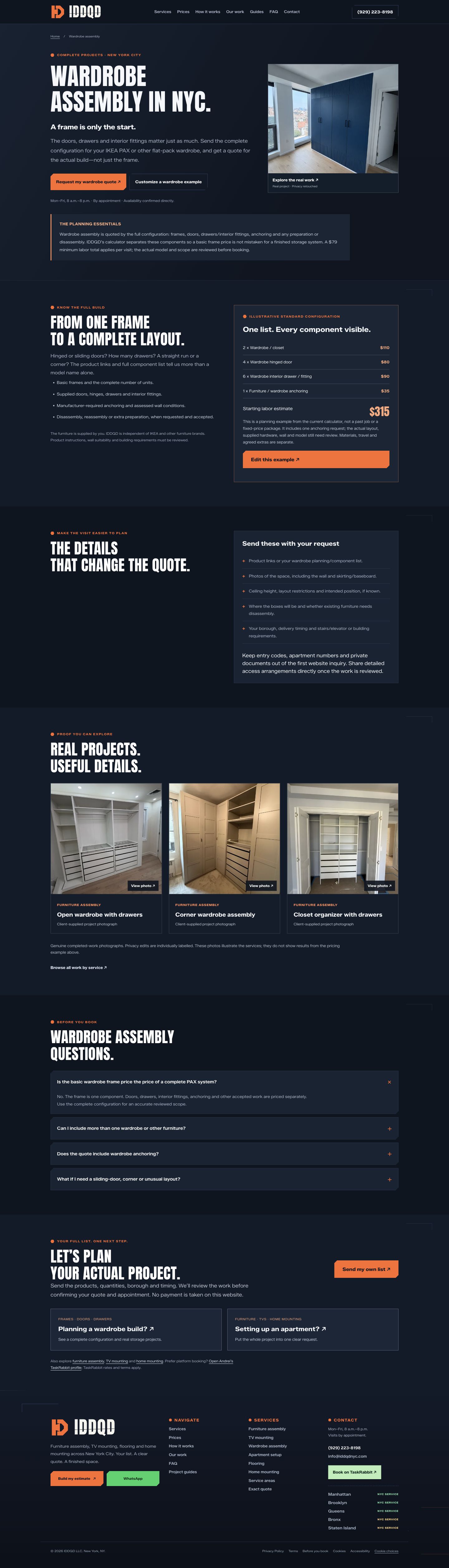
Apartment setup
Connect several services to one real-life need.
- Starting point
- No apartment-setup page existed. Customers had to assemble a multi-service request themselves.
- What Puzinski added
- A move-in planning destination connecting furniture and mounting, complete-list guidance and a $309 starting-labor example that can be edited.
- Why this decision
- A move-in is a situation customers recognize. Organizing around it makes the combined project easier to describe while retaining single-item requests.
Choose a starter → edit the actual list → request owner review.
A practical path toward complete direct projects. No appointment is reserved by the planner.
Inspect the live page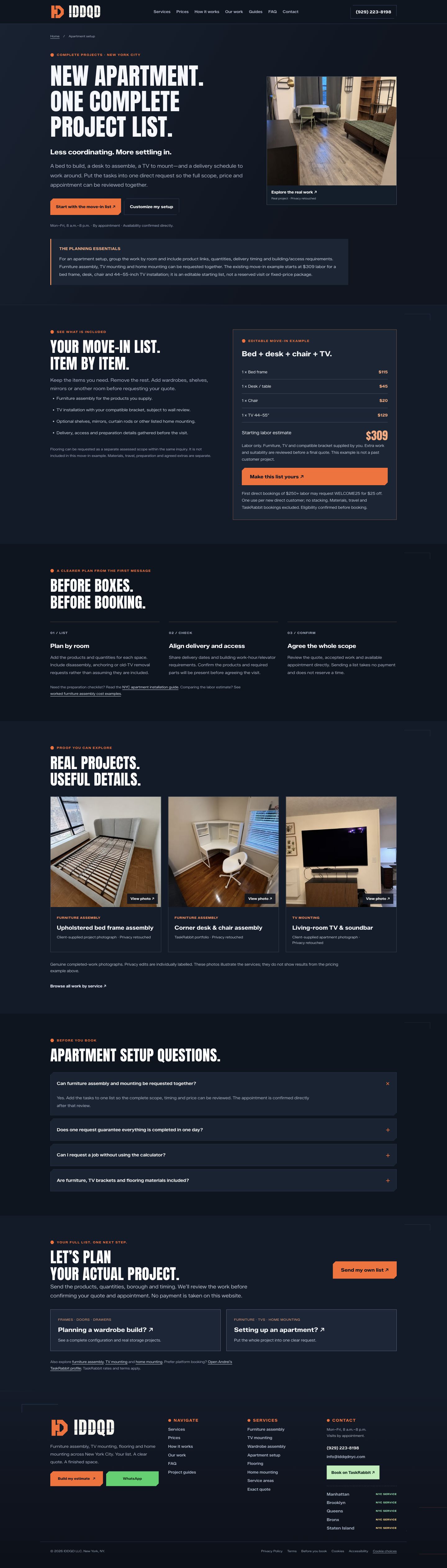
Real-work gallery
Let genuine craftsmanship support the choice.
- Starting point
- The unpublished draft did not offer the current service-organized gallery of real completed work.
- What Puzinski added
- 50 genuine photographs from the client’s supplied work and public TaskRabbit gallery, organized by service/furniture type, with privacy edits disclosed and project inquiry links.
- Why this decision
- Customers need to see work like their own project. Relevant proof belongs near the decision, not hidden behind a general claim.
Browse the matching category → inspect a photograph → ask about a similar project.
Stronger presentation of the client’s existing work. Fifty photos are not fifty distinct jobs, and the craftsmanship is the client’s.
Inspect the live page
Project guides
Give practical questions a useful home.
- Starting point
- The original draft had no guide hub or original planning articles.
- What Puzinski added
- A crawlable guide index connecting cost and preparation questions with the relevant services and inquiry actions.
- Why this decision
- Some visitors are still planning. A useful answer can support their decision and introduce the appropriate service without forcing an immediate sale.
Choose the planning question → read the answer → explore the matching service.
A structured home for original content and internal links; organic growth still needs ongoing measurement.
Inspect the live page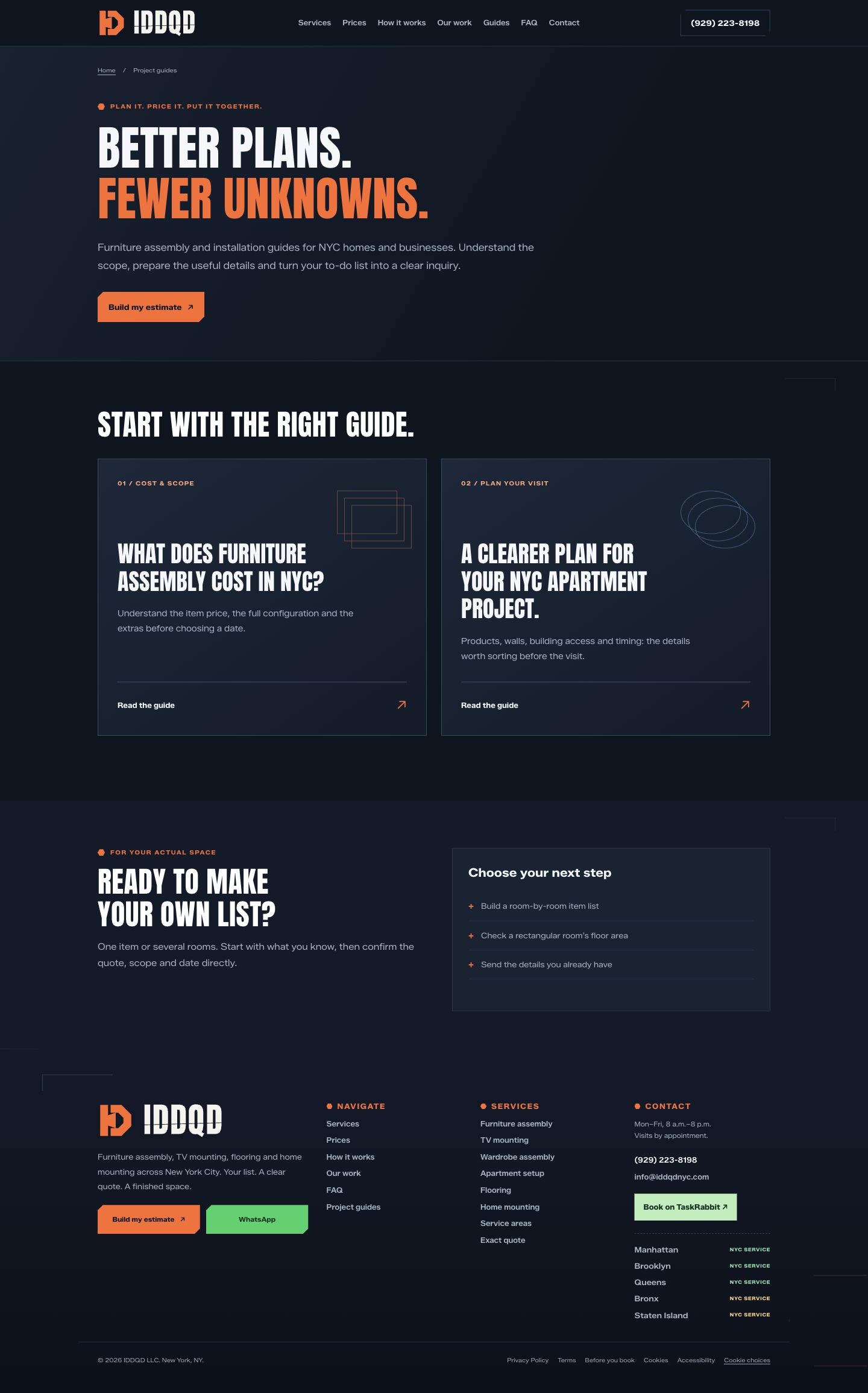
Furniture assembly cost guide
Teach customers how to read the estimate.
- Starting point
- No standalone cost guide existed in the supplied archive.
- What Puzinski added
- Original explanations of itemized labor, minimums, configuration examples and what to prepare for a usable quote.
- Why this decision
- A useful pricing article should answer the buying question and reflect the actual service catalog. It should not attract visitors with a price that means something different in practice.
Understand the price structure → identify the actual items → build a list.
More context for a price-sensitive buyer, with examples explicitly separated from final quotes.
Inspect the live page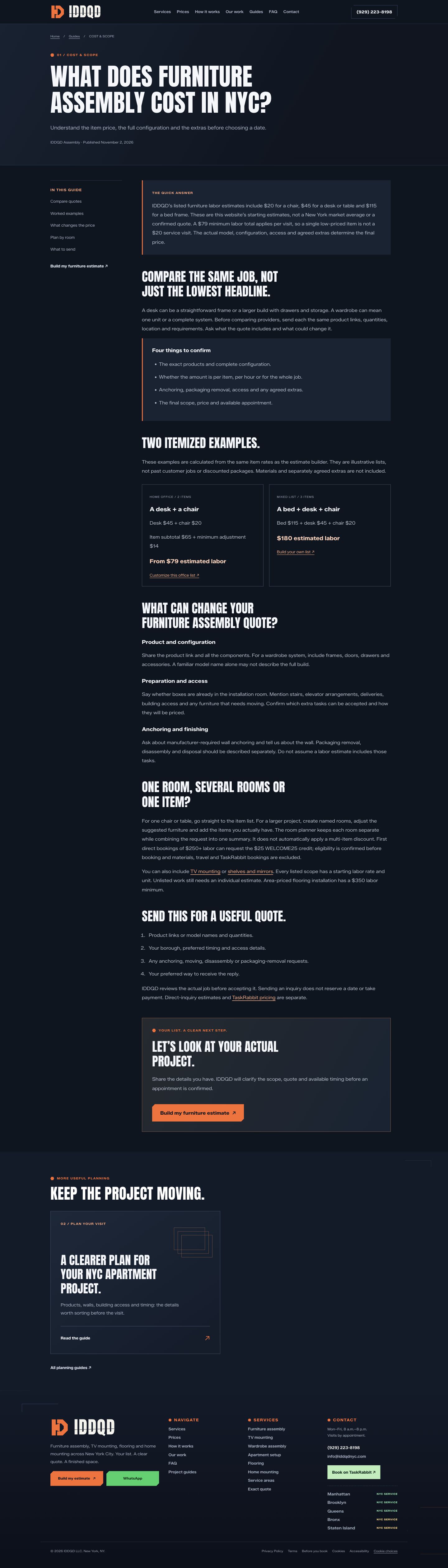
NYC apartment installation checklist
Prepare the project before the visit.
- Starting point
- The original draft had no dedicated apartment preparation guide.
- What Puzinski added
- Original guidance on product links, wall details, workspace, building access and the information needed before confirming work.
- Why this decision
- Preparation affects whether a request can be reviewed and a visit can be planned sensibly. A clear checklist turns that uncertainty into useful customer input.
Check the requirements → collect missing details → send a clearer brief.
A practical preparation resource connected to real services and the inquiry form.
Inspect the live page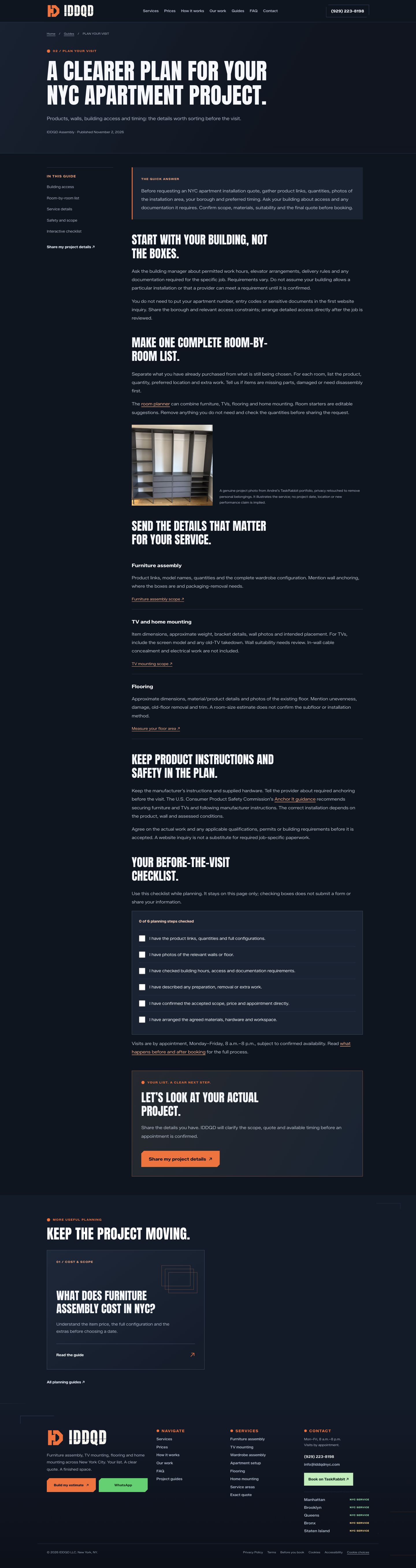
The website connects.
The owner stays in control.
The inquiry is the beginning of a workflow. Each connection was chosen to carry useful information into the next step, with clear review boundaries.
- 01Customer projectServices + real work + planner
- 02Reviewed inquiryNetlify Forms + selected scope
- 03Private owner alertSigned route + client Telegram
- 04Quote & scope reviewItemized draft + owner checks
- 05Current-version approvalChanges invalidate old approvals
- 06Manual phone sendOwner sends in WhatsApp, SMS or email
Explanatory diagram of the implemented system. Customer messages are not automatically sent.
Domain + business identity
The client’s iddqdnyc.com domain and info@iddqdnyc.com business address were applied consistently across pages and contact actions.
Give the business a recognizable direct destination and consistent contact details.
How the boundary works
The public email address is a contact channel; automatic form-email copies are not connected.
Netlify hosting + HTTPS
The built website is published to the client’s separate Netlify project, with the custom domain, public assets and form processing.
Keep the public site and its server-side inquiry handling in one maintained deployment.
How the boundary works
Client and agency projects remain separate. The website does not take payments or reserve visits.
Netlify Forms + review step
The customer reviews the request before a server-processed submission. Selected items, work types, location, timing and contact preference travel with the inquiry.
An inquiry should arrive with the context needed to review the actual job, rather than depend on a visitor sending a separate email draft.
How the boundary works
The visitor can skip the calculator or use email-only contact. Submission is a request for review.
Signed webhook + private Telegram bot
A dedicated signed delivery route sends website inquiries to the fixed private client chat. Validation and replay checks protect the notification path.
Keep incoming direct requests near the owner and avoid exposing lead delivery to an arbitrary recipient.
How the boundary works
No bot token, private chat identifier, customer record or live conversation is shown in this case.
Custom quote assistant + private workspace
The selected list becomes an itemized draft. Public rates, work types, units, minimums and requested introductory credit are recomputed on the server.
Carry the customer’s requested scope into review without treating a browser total as a final approved quote.
How the boundary works
The owner checks missing details, suitability, price and the required review points. Custom lines are never silently priced at zero.
Owner approval → phone messaging
The owner approves the current draft in Telegram, then opens it for a final manual send through the phone’s WhatsApp, SMS or email app.
Fit the communication process to the owner’s phone without a new paid messaging provider or unreviewed automatic replies.
How the boundary works
Changed details invalidate approval. Approval is not proof of customer delivery; final sending stays manual.
Google Search Console + sitemap
A verified property and sitemap connect the 11 public pages and image references to search discovery reporting.
Make the site’s structure discoverable and give future search work a real query/click feedback source.
How the boundary works
Success and 11 discovered pages were observed. Discovery does not prove indexing, rankings, AI citations or traffic.
Google Analytics 4 + consent
A dedicated IDDQD stream is consent-gated. The public site provides analytics choices; private customer details and free-text requests stay out of analytics events.
Create a measurement foundation while separating business inquiries from optional traffic measurement.
How the boundary works
No commercial uplift or certified Core Web Vitals result is asserted.
IndexNow change submission
The publication script submits changed canonical public pages after verifying the live build and skips unchanged repeat submissions.
Notify supporting search engines about actual page changes rather than repeatedly submitting an unchanged site.
How the boundary works
A notification is not a ranking or indexing guarantee.
TaskRabbit + direct contact choices
Visible links retain the client’s existing TaskRabbit route alongside direct requests, WhatsApp, SMS, phone and email actions.
Let customers choose a comfortable next step while building an independent direct channel.
How the boundary works
TaskRabbit is a visible outbound option, not an API integration. TaskRabbit-origin jobs remain on that platform.
Prepare the next step.
Keep the judgment human.
Practical drafts and reminders for direct jobs, designed around the owner’s phone. The fuller workspace stays optional.
01 / Direct-inquiry follow-up
- Starts when
- A direct request needs more information or a next reply.
- What was built
- Private reminders and drafts ask for missing product, location or timing information.
- Business purpose
- Keep the next action visible and make it easier to prepare a complete, consistent response.
Owner control
Owner reviews and approves the current draft, then sends manually. Empty, paused, closed, test and TaskRabbit records are excluded from direct-job reminders.
02 / Agreed-visit preparation
- Starts when
- The owner records an already agreed visit after reviewing the quote.
- What was built
- A confirmation draft and product, access and workspace preparation checklist.
- Business purpose
- Carry the agreed scope into the next customer step and make preparation explicit.
Owner control
The system does not book an unconfirmed slot, check calendar conflicts or send a customer message automatically.
03 / Feedback + photo permission
- Starts when
- The owner marks the work completed.
- What was built
- Separate drafts request honest feedback and permission for specific project photos.
- Business purpose
- Make genuine future proof part of the completed-job process without inventing reviews or assuming image permission.
Owner control
Approving the request does not record customer consent. The actual response and permitted photos must be recorded separately.
04 / Private project-story draft
- Starts when
- Completed facts and specifically permitted photographs are available.
- What was built
- An original factual draft package for a future project story, with privacy and fact checks.
- Business purpose
- Help turn real completed work into useful proof for future customers.
Owner control
Facts, image privacy and permission need separate review. Publishing is manual; test records cannot become real client proof.
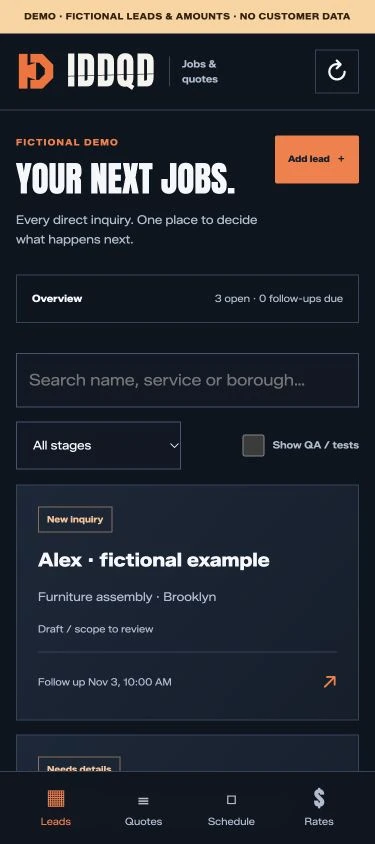
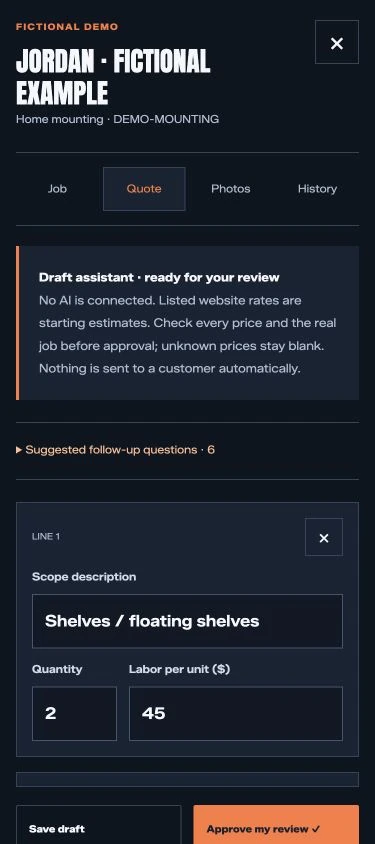
Built for the work after Send.
The itemized request becomes a quote draft. The owner reviews the scope and current wording before a manual phone handoff.
Explore the fictional workspace demoThe rules-based assistant is implemented. The owner’s end-to-end phone acceptance check remains open. No paid AI runtime or free-form translation is claimed.
The details around
the decision matter.
Clear supporting information.
Privacy, terms, booking information, cookies, accessibility and a confirmation page explain the site’s role and what happens before a visit. They support a consistent customer journey.
Inspect all supporting page captures
Search-ready structure.
Canonical URLs, distinct metadata, crawlable internal links, structured data, image references and share covers support the original service and guide content. Self-hosted fonts, responsive images and reduced-motion fallbacks support the experience.
Search Console and consent-based Analytics create a foundation for learning from actual queries and inquiries.
See the work.
Understand the evidence.
One unpublished page, the original archive and its before captures.
Eleven main pages, custom planning tools, genuine gallery and private workflows.
89 automated checks and 85 public page/width checks in the November 2 review.
Measurement status & proof boundaries
Implementation evidence: preserved source, actual before/after captures, 89 automated checks and 85 public page/width checks from the November 2 launch review; earlier private Telegram test delivery confirmed by the user. Unpaid pilot. Owner-phone acceptance remains pending. No post-launch traffic, booking, revenue, conversion or time-saving uplift has been established. Google Maps verification is deferred.
The client’s prior photographs and platform reputation are separate from Puzinski’s delivery. No former-employer material, actual lead record, private address, testimonial or paid-engagement claim is included. Search discovery is not ranking or traffic evidence.
The design. The words.
The system behind them.
Puzinski’s work connects the parts a customer experiences with the work the business has to do next. This project shows strategy, visual design, original content, development, integrations and approval-led automation in one delivery. Start with the bottleneck your business needs to solve first.
- 01 / Bring the bottleneckYour website or process and the change you want.
- 02 / Agree the first phaseScope, price, ownership, handover and support in writing.
- 03 / Review a working releaseCheck the delivery, then choose what to measure next.
A focused project can stand on its own. An inquiry starts a conversation, not a subscription.